Lablicate

Business idea: Open Source Software “OpenChrom®”.
Industry: Chemical analytics
Year founded: 2013
Philip Wenig’s company enables automated evaluation and processing of measurement data
Category
On this page
Lablicate: Successful in chemical analysis
Philip Wenig’s company enables automated evaluation and processing of measurement data. For the user-friendly implementation of the solutions, Lablicate relies primarily on a Java environment and uses the latest open source technologies as well as agile development methods. In addition to customer-specific approaches, Lablicate’s own Open Source software “OpenChrom®”, which has been freely available since the beginning of 2010, offers an “excellent” analysis tool (1st place “Eclipse Community Award Winner”) for chromatography and mass spectrometry – two widely used and versatile measurement methods in chemical analysis.
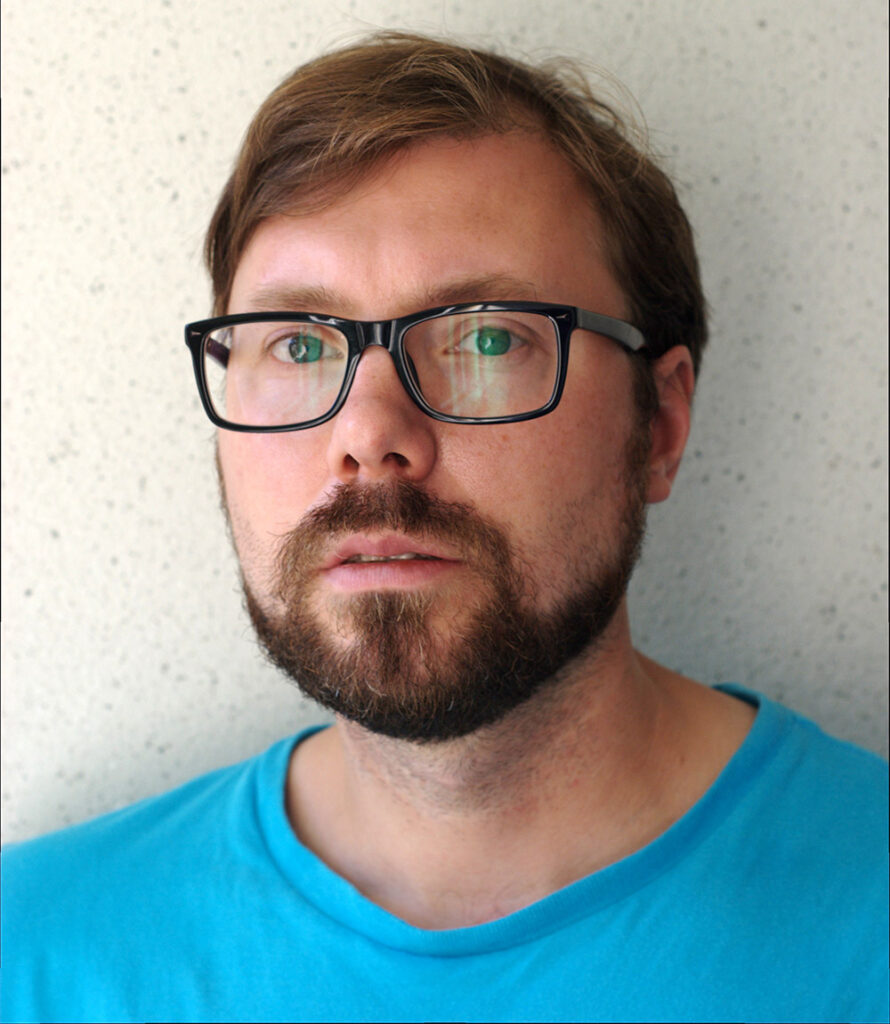
Philip, your business idea revolves around chemistry and technology, a special combination: How would you explain your company to an old acquaintance?
I would ask, for example, if he watches one of these CSI crime series. There, often taken samples are electronically analyzed in an apparatus. We are developing the software for this. However, this software cannot only be used in forensics.
This often looks surprisingly simple and user-friendly on television…
The problem is: Of course, it is not as simple as is suggested on television. Many things also take place in food analysis: In Hamburg, for example, this technique is used to randomly check foodstuffs to see whether certain limit values, such as pesticides, have been complied with. Or whether substances are present that have no place there. These data are measured and recorded using mass spectrometers, among other things. We develop software for the evaluation of these data.
Can you also support quality control in the textile industry?
Let’s continue to think in terms of goods control for an example in quality control in the textile industry: a Chinese manufacturer guarantees 100 percent cotton. You get the goods. How will you determine whether this is pure cotton or not? You could burn a shirt and smell if it is cotton. Then the shirt is destroyed. This is where Analytical Pyrolysis comes in: You take a representative sample, a few hundred micrograms are sufficient, unify it and measure it. On the basis of the data sample, which is produced after this chromatography and mass spectrometry, it is possible to say very precisely which substances are present here, which enables excellent quality control. The beauty of this is that the T-shirt is not destroyed.
Our technology has also helped in the paper industry: Black dots on a certain paper led to massive printing problems. Using our pyrolysis GC/MS, we were able to prove to our client that the adhesive labels were the cause of the problem.
The basis of your business idea was your scientific work…
The real background was actually my laziness! (laughs)
In 2004, as part of my studies, I started to increasingly go into the field of analytics. Chemistry has always been my thing: I was the only one at school at the time who wanted a chemistry performance course. I then found it extremely stimulating to combine the components of chemistry and computers. That’s why I studied Analytical Pyrolysis. I started with data analysis. There are a handful of large manufacturers of such systems worldwide. The problem is: they store all their data proprietary. That means you can’t get to it without further ado. So you have to work with the software of the manufacturer. But an evaluation took a week to one and a half. Of course this is much too slow for the industry! And since I had just mentioned laziness: I don’t feel like doing all this stuff by hand. Then you do an evaluation once a week. Then you notice a mistake and have to start all over again. Because it is manual. So I thought to myself: You have to automate that! Since I have always liked programming, I looked at the data format of the manufacturer. Then I got to the raw data and thought to myself: If I can read it, then I can also immediately modify my scripts around it. That’s how the basis of our company came into being. At that time we set our software to Open Source.
Why Open Source?
The software I had to use from the manufacturer is, as I said, proprietary. In addition, it was developed once and never revised or supplemented again. The manufacturers understandably only do what is necessary. Especially in the area that is very special and where you have an oligopoly, where there is no fierce competition like in the consumer area, the customer falls by the wayside. The software was good for its time, but it couldn’t help in this form.
I set it open source because there are so many smart scientists who deal with these topics again and again and end up asking themselves: How do I get my data? That’s why I released my software, they can use it and build on it. At that time I was still so naive and thought that would be the Linux of chromatography. It wasn’t like that, but collaboration is much more fun than looking for a solution in your little soup.
I found the topic of chromatography and data analysis far too interesting to do anything else, even after my doctoral thesis. That’s why I pursued this topic after my diploma and doctoral theses. Together with my project partner, I was able to demonstrate during my dissertation that the identification of substances by peak pattern analysis using analytical pyrolysis coupled with gas chromatography and mass spectrometry (Py-GC/MS) works.
What support did you get for your project?
Nadine Weitendorf and Barbara Lederer from the University of Hamburg provided us with excellent support for our EXIST application. On the Tutech side, Thomas Sperling and Nils Neumann gave us great guidance: You have your head full of studies and business ideas and then you stand in front of the huge jungle of startup support. We didn’t know where to start at all. Or what the implications are. Both teams gave us great advice.
How did the cooperation between Tutech and the University of Hamburg work back then – before beyourpilot or Startup Port and the joint partnership?
Previously, the parties had regularly exchanged information informally about our concerns. Now that’s official. Of course, they worked in different areas: The University of Hamburg has clarified how it works with the best of them to call up the funds.
What funds did you receive?
At EXIST you get an office space as well as material resources. That was about 18.000 Euro, which we spent for laptops and printers. And a one-year scholarship, i.e. EXIST 1. EXIST 2 also exists, which then runs for three years and has a larger budget. So we played office for a year. (laughs)
Then you also need the right employees: Where do you get the competence for your special topic?
That’s a big challenge. I am a scientist and not a human resources person. I can’t look into people, that’s why I’ve paid hard dues.
Finding people who can program and have an idea of chemistry is incredibly difficult. But Open Source played into our hands. Because with Open Source I’m turning the innovation dilemma around: That is, I give up our work, people play around with it, and I can still hire those who do well. So I don’t lose anything. That’s how we found employees, even though I admittedly expected a little more here. But this is a very complex area.
What were your experiences with employees like?
For example, we once had an employee who interviewed during the home office. This finally led to his resignation and to a negative assessment on his part towards us as an employer. But I just have to make sure that the money comes in at the end of the month, and if someone is not helpful enough, then of course I have to draw the consequences. I want commitment: If you say you take on a task, then you finish it. When problems arise, we talk about them. But if you communicate that much too late, we have a problem. In this case I was able to present a solution to the customer with a lot of effort and we hired someone new. So my human resources skills are expandable.
After all, you didn’t “go into the game” as a human resources person, but as a scientist. And of course you still lack the size for a human resources department…especially since your specialist area is so special that you couldn’t just “outsource” this decision!
Definitely. And that is also my basic attitude as an entrepreneur: I am responsible! For example, I have a tax consultant who does an excellent job. I can ask him things at any time, which he then explains to me. I have to understand the key points, because the decisions are mine to make. The same applies to our lawyers et cetera…they all cost a lot of money, are really good, but I have to tell them how I want it and the final decision lies with me.
Do you sleep better when you employ accountants and lawyers?
As an entrepreneur you never sleep well anyway! It’s such a control thing…it’s all about earning money. Everything else was in vain. There are so many different phases of worry that you go through. First we have an idea. Then we have a customer – that’s why you can’t say “let’s see if it works” anymore. No more “trial and error”. However, if you communicate correctly with customers, they may forgive you for your mistakes. But you have to do a good job and above all be binding. That’s just not as playful as it was in the initial university phase. Sometimes I wish it back! (laughs) But you must not lose this special spirit that promotes your innovation. Even if later money increasingly robs you of sleep.
What relieves fear and anxiety here?
For example, there is a nice book: “In Search of Stupidity: Over Twenty Years of High Tech Marketing Disasters”. It deals with all the mistakes of big companies like IBM and others. It often describes an unparalleled chaos that some survive and others do not. I would recommend this to any founder, because it takes away the fear that you have to make everything perfect. Because that is simply not possible. A good friend once told me: The most important thing is that you make fewer mistakes than your competitors.
A positive interpretation…
Exactly! Because you make mistakes anyway! In addition: Even if I tell here of the fear of mistakes and denounce the missing sleep, then let me mention still positively that one makes all this yes for himself! That is a completely different motivation than if you do it for a company or a boss. You have your own destiny in your hands. With all its positive and negative risks. You’re always on your toes and have to be careful…but it’s about you: What could motivate you more!
Are you currently well positioned? How do you see your future?
We are well positioned at the moment. We’ve learned to bring open source and business together in this area of chemistry – which has been common practice in other areas for quite some time. So we have found a good niche. Over the next five years, we will be expanding our business. We have many contacts. We have good feedback. We have customers who keep us afloat. But I have to expand the business. At the moment we are 7 people. We can’t pay big salaries, but we are flexible. We offer interesting jobs. In the next three to five years there will be 15 employees. But that’s something I see very clearly: I am a technologist! I am not a business economist. I can learn here up to a certain level, but I still can’t push millions back and forth for any tax advantages. I’ll have to hire someone in the future. Or we will be bought up by a neutral manufacturer in five years. But under the premise that we understand open source and can continue to serve different customers. That is the prerequisite.
I deliberately did not take up venture capital because we are developing a market that is not entirely clear. In the beginning this gives you a certain freedom of action, but after three years they annoy you because of the return. After financing rounds B and C, you will lose your company at some point. That’s why we work it out for ourselves. More tedious, more difficult and of course connected with clearly worse sleep. But this way we can develop a market that has it all. Maybe we also fail. We do not know. But that is entrepreneurship.
How productive is your niche? Is there much for your company to discover?
The need is immense in this area. But I’m not necessarily an idealist now either: I want to earn my money with it! I don’t pay a pension, have no unemployment benefit: So I also have to see where I am staying. If the company flopps, then I have no security. So it must be worth it. Otherwise I would not do it. Because you also have responsibility for yourself and your family.
How does your responsibility change over time?
I will continue to move away from programming and become increasingly involved in contracts. To know exactly how to connect open source with business. This is incredibly important to build the community and the business around it. Later, when everything goes well and I’m out, I’d like to buy a food truck. Bread is my passion. Water, flour, salt, sourdough or yeast…that’s all it takes. I would sell it at festivals, have a snack and chat nicely with the people… Doing nothing would be nothing for me.
What is your tip for young entrepreneurs?
If you feel like it, do it! You can’t buy the experience you gain! Learn more, absorb the influences. Also focus on the customer: What does he need? How do we make our performance palatable to them? How does the money get in? There are various models and it is a process…where you sometimes wish to be an employee again! (laughs)
Link to the homepage of Lablicate
Philip Wenig recommends the following books on the subject of foundation:
Merrill R. Chapman – In Search of Stupidity: Over Twenty Years of High Tech Marketing Disasters
https://www.amazon.de/Search-Stupidity-Twenty-Marketing-Disasters/dp/1590597214
Lawrence Lessig – Code: And Other Laws of Cyberspace, Version 2.0
https://www.amazon.de/gp/product/0465039146
Free Culture: The Nature and Future of Creativity
https://www.amazon.de/gp/product/0143034650
Remix: Making art and commerce thrive in the hybrid economy
https://www.amazon.de/gp/product/B003MAJ4IO
Jim Whitehurst – The Open Organization: Igniting Passion and Performance
https://www.amazon.de/Open-Organization-Igniting-Passion-Performance/dp/1625275277
Henry Chesbrough – Open Innovation: The New Imperative for Creating And Profiting from Technology
https://www.amazon.de/Open-Innovation-Imperative-Profiting-Technology/dp/1422102831