Colipi

Business idea: Sustainable palm oil alternative through fermentation
Industry: Biotech industry
Year of foundation: 2021
The scientists of the Technical University of Hamburg (TU Hamburg) are developing a CO2-neutral alternative through fermentation
Category
On this page
Colipi: Sustainable palm oil alternative through fermentation
The production of palm oil threatens our climate: over nine million hectares of rainforest around the equator have already been cleared for it. This not only destroys important habitats of endangered animal species, but also releases a large amount of CO2. The start-up Colipi of the Technical University of Hamburg (TU Hamburg) has developed a globally unique technology that can produce sustainable oil in a CO2-neutral way.
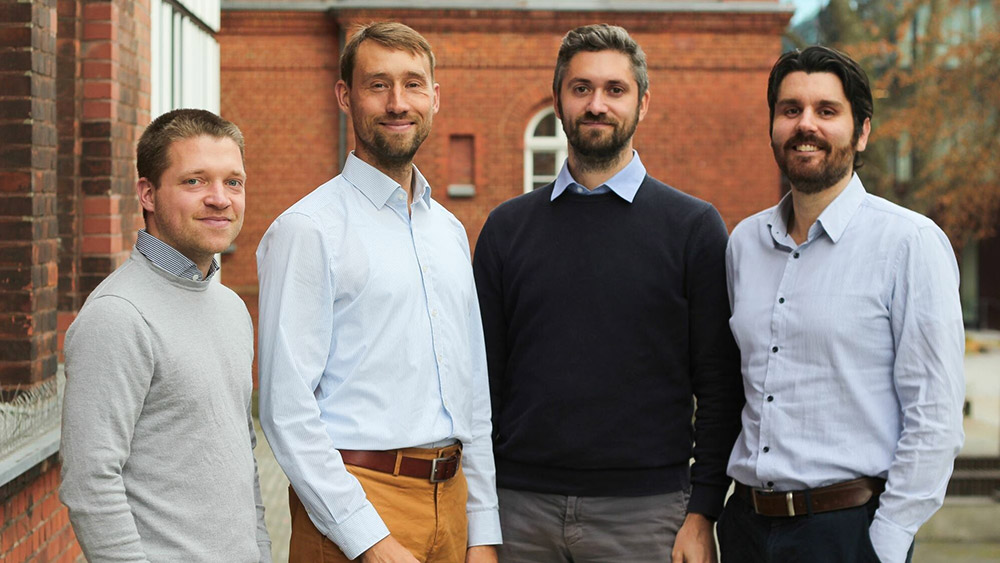
Philipp Arbter graduated from high school in Krefeld (North Rhine-Westphalia) in 2008, then did his civilian service and went to Berlin, where he first studied biology for a semester: “But that wasn’t really my thing, because I was missing the technical component,” he says. So he switched to biotechnology. For his Bachelor’s degree, he went to the Berlin University of Applied Sciences. He then moved to the TU Munich for a degree in bioprocess engineering. Finally, he moved to Hamburg to the Institute for Bioprocess and Biosystems Engineering at the Hamburg University of Technology (TU Hamburg). Philipp Arbter first became involved with lipid production by yeasts in the course of his bachelor’s thesis, which he completed at the University of Louisiana at Lafayette (USA). The topic fascinated him and has continued to accompany him: “In my doctoral thesis, which has been defended in the meantime, I looked at how biotechnological processes, in which cells or enzymes are used that produce special chemical compounds, can be coupled with electrochemical processes. The idea is that many of these processes have the potential to become more effective and sustainable. Here, among other things, I have also studied the influence of electricity on oil production by yeasts.”
Unparalleled technological approach
After his doctoral thesis, Philipp was surprised that the approach of producing oils through yeasts has not yet been accepted in industry and business: “Because it was probably difficult to scale up to produce the oil biotechnologically in large quantities and large sums of capital are needed for production plants. But if it works, it’s very promising: then we’ll just have to solve a lot of problems,” Philipp thought to himself and threw himself into the topic with his team. The first successes came and Philipp was surprised that the majority of potential customers were unaware of their technological approach, even though it has a certain relevance or scope: “Europe imports up to seven million tonnes of palm oil every year. It is used here as fuel, for example, and is in every second supermarket product. The cosmetics companies were not aware that you can use yeasts to produce oils that are very similar to fatty acids or vegetable oils. I thought they had done their homework, tried out the possibilities in all directions and I, as a doctoral student, couldn’t tell them anything new,” he says, surprised.
Time to start up
The moment inspired him and the timing seemed right for a start-up, because he had enough time and was also “keen on the subject”: “These are the best prerequisites for such a venture: If I had already been working in a company for ten years, I would probably have been less ambitious in this respect. But I’m still young and therefore at the right age for something like this,” says Philipp: “I had the idea, saw the technology and wanted to implement it: there’s a good funding landscape in Germany for this.”
Philipp is convinced that there is certainly still a lot of similar potential out there that needs to be identified. He advises those interested in setting up a business today: “There are many possibilities as a doctoral student after the doctorate. Of course, it always depends somewhat on your own situation. One option is to approach companies with your idea and evaluate whether it could work there. Trying makes you wise.”
The idea: A CO2-neutral alternative through fermentation
In the process discovered, the sustainable oil is produced through fermentation. For this, yeasts are used that utilise sugars from industrial and agricultural waste products, such as molasses or other biomasses, and thus keep their metabolism running. After nitrogen and phosphates in particular have been used up, growth stops and lipids are formed with the remaining excess carbon. These lipids can then be isolated and, depending on the type of yeast, are very similar to many vegetable oils. Normally, CO2 is produced during fermentation. But here, too, the team has found a climate-friendly solution, which they have just patented. “In the beginning, I had to see what was economically feasible. It was not so much the technology that was limiting: I looked at what could be produced in this way and what people would then buy,” says Philipp.
The “green” oil can be used to imitate palm oil or cocoa butter, but also to develop completely new oils without a natural model. “The diversity of the oils is also reflected in their application in creams, soaps or chocolates. In other words, everywhere where vegetable oils are also used today,” explains Max Webers, he is the COLIPI project manager.
Additional expertise
“I met Max Weber during my Bachelor’s degree at the Berlin University of Applied Sciences,” says Philipp: “We both studied biotechnology. He then went to Munich for his Master’s degree and continued to study management there. Max is an industrial engineer and when I had the idea for the EXIST funding application, we needed someone who explicitly operates at the interface between business, technology and science: He was able to imagine this and has been in charge of the organisational part and communication for COLIPI ever since. This means, above all, working through huge amounts of emails every day, organising meetings, preparing presentations, pitching to investors, making ourselves known and networking.”
Philipp met Tyll Utesch and Jonas Heuer at the Institute for Bioprocess and Biosystems Engineering at TU Hamburg. Tyll completed his doctorate there in 2019. Today, he is responsible – with his strengths in technology development and implementation – for the implementation of CO2 neutrality at COLIPI. Here, he already developed a novel electrode arrangement for electrochemically supported bioprocesses during his doctoral thesis, which was patented.
Jonas Heuer and Philipp were colleagues during the doctoral thesis and sat in the same office. Jonas’ doctoral thesis revolved around the enzymatic use of CO2. For this topic, he also acquired a high level of expertise in molecular biology and genetic engineering, which is also an option for the yeasts that are now being used. However, genetically modified organisms (GMOs) are a major barrier to market entry. Jonas also has expertise in downstreaming as well as product development and has completed an extensive internship with cosmetics companies. He also takes care of regulatory issues at COLIPI.
Philipp himself is more responsible for fermentation in the team, i.e. for the production of fats and yeasts. But a large part of his work is also process cost estimation and scaling. Together with Tyll and Jonas, he is responsible for the technological science side.
Start-up support
“At the time, I enquired about start-up support at Tutech, whereupon the start-up advisor Dr Andrea Otto from beyourpilot (Editor’s note: “beyourpilot” has been called “Startup Port” since July 2023) immediately contacted me. She advised and supported us with two EXIST research transfer applications for funding. Andrea knows what such an application should look like, what is required of us. She didn’t have the scientific view of the application – like we did – but the view of the jury. Andrea also regularly pushed us. And we desperately needed that. Unfortunately, our first application was rejected on 15 November 2020 because, among other things, we didn’t have any presentable prototypes yet. That’s why we then applied for Calls-4-Transfer, under the direction of my then institute director Professor Zeng,” Philipp explains.
The “Calls for Transfer” (C4T) programme launched in the summer of 2018 under the auspices of the TU Hamburg specifically addresses this problem and promotes the transfer of ideas, knowledge and technology at Hamburg’s state universities by providing initial support of up to 30,000 euros for project applications. The funding can be used flexibly in terms of both content and form, so that the project plans can be advanced in an implementation-oriented manner: “The arrangement of the funding was wonderfully unbureaucratic. Roland Winterstein from the C4T’s Controlling Department gave us excellent support with the finances,” he continues.
Nothing stood in the way of the second – and successful – EXIST application with the beyourpilot start-up advisor, and with a joint effort, the start-up received the longed-for approval in mid-2021: since November 2021, the funding has been flowing, enabling the expansion of oil production from laboratory scale to industrial production. Due to the increased awareness of sustainability, the demand for the CO2-neutral oil in commercial products is also rising: “This gives companies in the cosmetics and food industry a clear market advantage; no one wants to jump on the bandwagon too late,” Max Webers emphasises.
Founding, taking wing and entering the market
“We set up about a month ago so that we can now approach investors. That was not possible before the official start of funding – because of the conditions involved,” Philipp explains. They urgently need more help in the lab, because there are “many ideas – but too few staff”. Two scientists are needed for fermentation and processing. In addition, the founders are considering whether they should work together with someone to take care of advertising and sales for the market entry in terms of marketing.
“We are also trying to make a regulated departure from TU Hamburg. We are still allowed to stay here until 2024 – and we are grateful for that, but we are aiming for something of our own and don’t want to put unnecessary strain on the capacities here. So we are looking for external lab space and piloting opportunities,” Philipp looks to the future. In one or two years, they could grow to up to ten people.
The first products with COLIPI’s oil are expected to be on the market in two years. On the way there, beyourpilot is there to provide advice and support.